
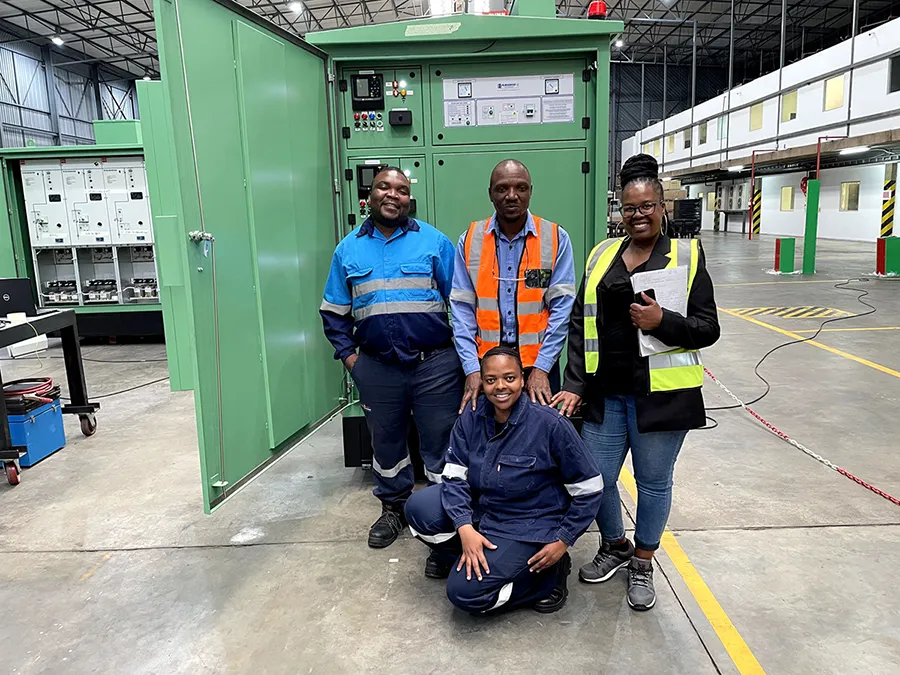
Before any medium-voltage switchgear leaves the factory, it must prove itself. That is the purpose of a factory acceptance test (FAT)—and it is one of the most important steps in delivering electrical infrastructure that performs reliably from day one.
What is a factory acceptance test?
A factory acceptance test (FAT) is a structured program of inspections and tests carried out on completed switchgear before it is shipped to site. It is often conducted in the presence of the client—or their appointed representative—who witnesses and signs off each stage of the process.
The FAT is not a formality. It is the last opportunity to identify and correct any manufacturing defects, wiring errors or configuration issues under controlled workshop conditions, where rectification is straightforward and low-cost. Finding a problem at the factory takes hours to fix. Finding the same problem on a remote substation site—after transport, craning and civil installation—can take days and carry significant financial and safety consequences.
What does a FAT cover?
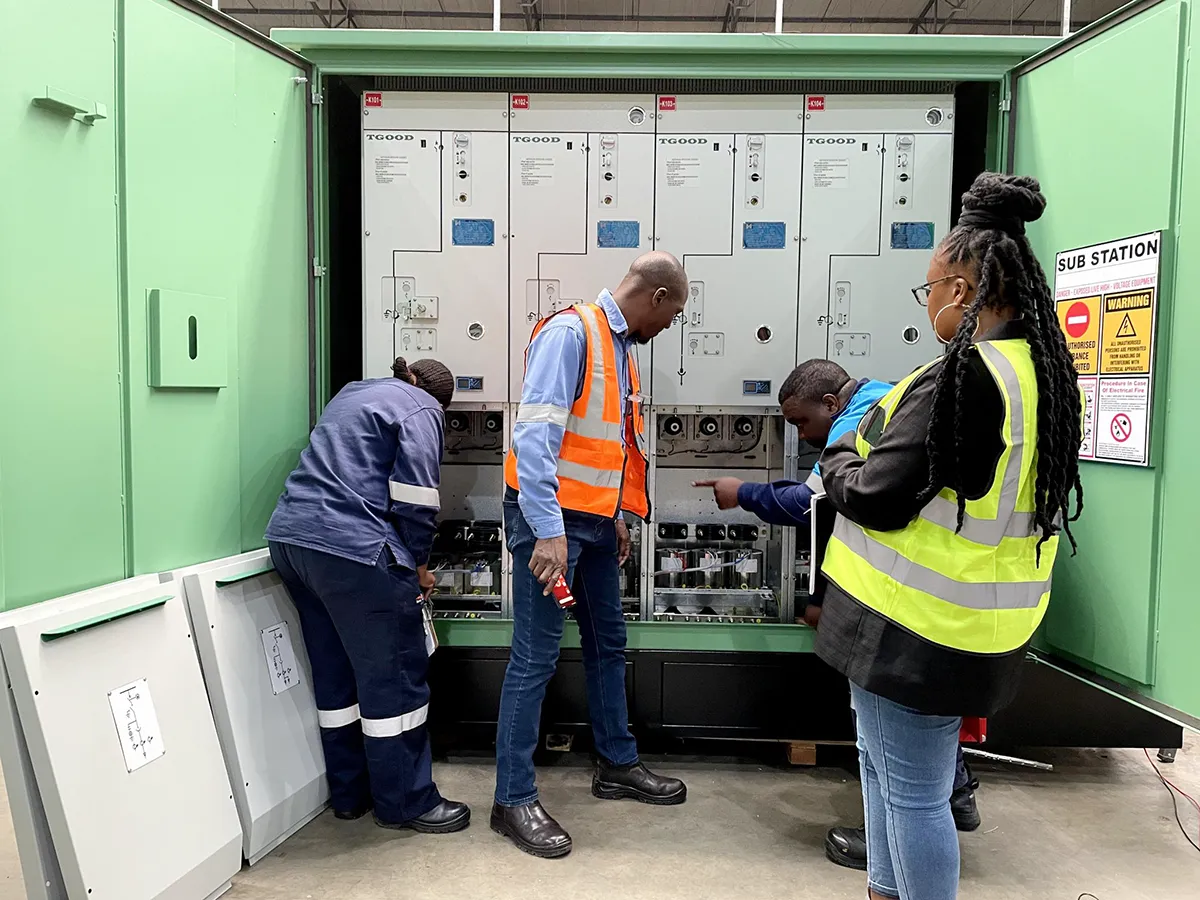
For a medium-voltage switchgear kiosk or substation, a comprehensive FAT typically covers the following areas.
Visual and dimensional inspection
The physical build of the switchgear is checked against the approved drawings and specifications. This includes panel dimensions, busbar arrangement, cable entry provisions, labelling, earthing connections and the condition of all surfaces, gaskets and seals. For outdoor kiosk installations, weatherproofing and IP rating compliance are also verified at this stage.
Primary circuit testing
The main current-carrying conductors—busbars, circuit breakers, disconnectors and earthing switches—are tested to confirm correct installation and insulation integrity. Tests include high-voltage withstand (HV dielectric) testing, which applies an elevated voltage across the insulation system to confirm there are no breakdowns or partial discharges that could lead to failure in service.
Secondary circuit and wiring checks
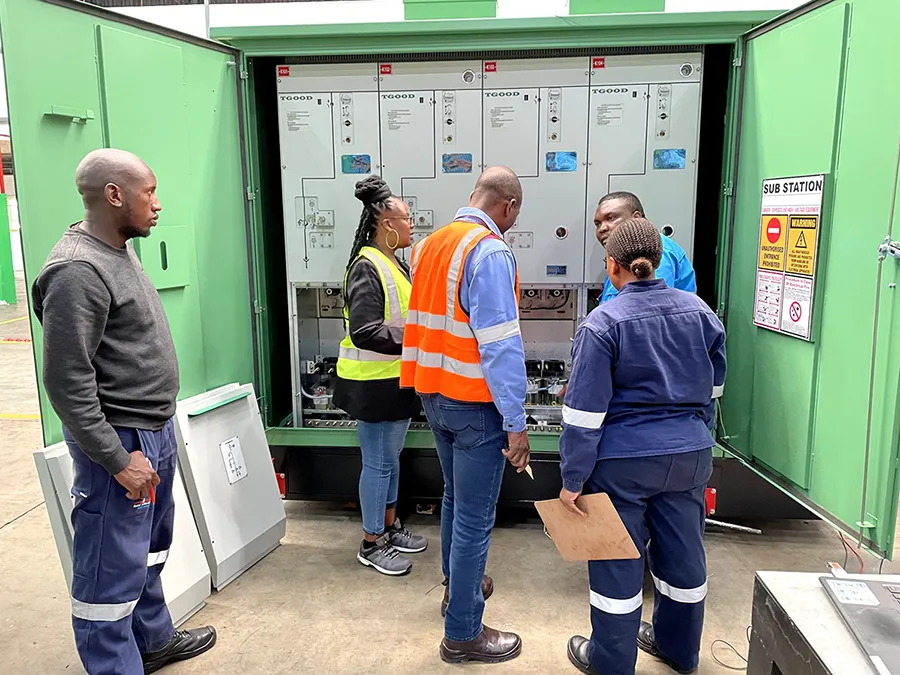
Every control cable, protection relay connection, current transformer (CT) and voltage transformer (VT) circuit is traced and verified against the approved wiring diagrams. This is painstaking work, but it is where manufacturing errors most commonly occur—and where they are most easily caught.
Functional and operational testing
Circuit breakers, disconnectors, earthing switches and interlocks are operated through their full range of movement, both manually and under electrical control, to confirm correct mechanical and electrical operation. Interlock sequences—which prevent unsafe combinations of switching operations—are tested to verify they function exactly as designed.
Protection relay testing
Where protection relays are included, their settings are verified and injection tests are carried out to confirm the relays respond correctly to simulated fault conditions. This is particularly critical for grid-connected renewable energy projects, where protection coordination must meet the requirements of the network operator.
Communications and SCADA verification
For switchgear equipped with remote monitoring or control interfaces—such as Modbus, DNP3 or IEC 61850—communication functionality is tested to confirm correct data mapping and response to control commands.
Who attends a FAT?
The client or their representative is present throughout. Depending on the project, this may also include the end user’s protection engineer, the principal contractor, a third-party inspection body, or—for grid-connected projects in South Africa—a representative of the network operator. TGOOD’s factory test team leads the process, with all results documented in a formal FAT report that is reviewed and signed off before the equipment is released for shipment.
Why does it matter for South African projects?
South Africa’s electrical infrastructure operates under demanding conditions: high ambient temperatures, dust, the risk of wildlife ingress in rural installations, and a grid that places increasingly stringent requirements on protection and control systems as renewable energy penetration grows. Getting switchgear right before it reaches a remote Free State substation or a coastal kiosk installation is not just good practice—it is essential to project timelines and long-term grid reliability.
The South African grid connection process also requires documentation of compliance with applicable standards, including SANS and IEC requirements. FAT records form part of this compliance package and may be requested by Eskom or the relevant network operator during the energisation and commissioning process.
TGOOD’s approach
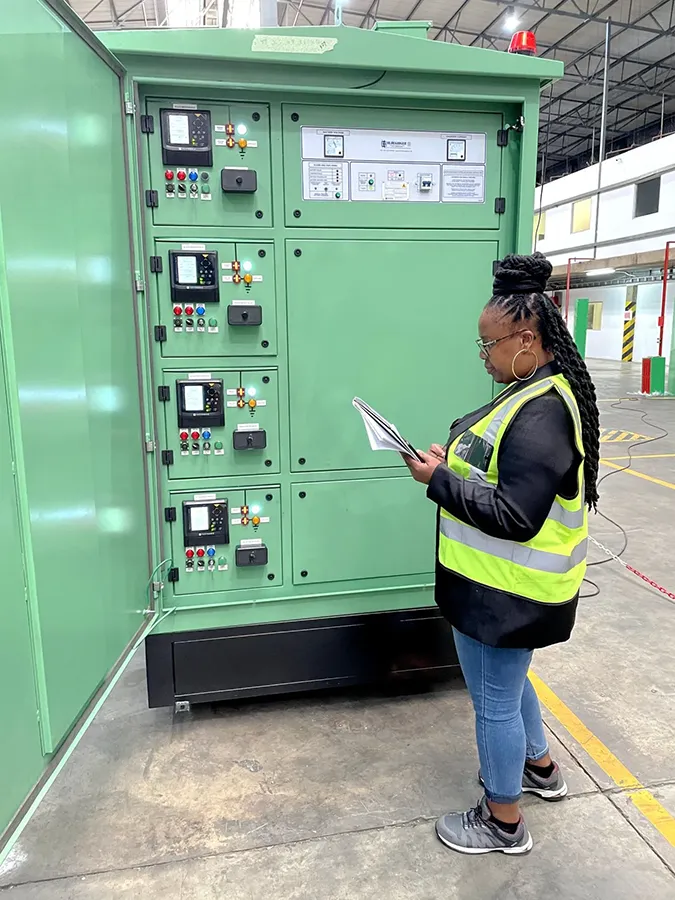 TGOOD Africa conducts factory acceptance tests on all medium-voltage switchgear supplied for substation and kiosk projects, as a standard part of the delivery process. Our test procedures are aligned with IEC 62271 and applicable SANS standards, and TGOOD Africa’s technical facility is equipped to carry out the full scope of primary and secondary testing.
Clients are encouraged to attend and participate actively in the FAT process. We provide full documentation—test records, wiring diagrams, relay setting sheets and photographic evidence—as part of the FAT sign-off package, giving project teams full confidence in the equipment before it is released for shipment.
A successful FAT is not just a box ticked. It is the foundation of a reliable substation.
Find out more about
- Our medium voltage switchgear offering
- Our power solutions for the renewables industry
- Our TGOOD Africa regional subsidiary
 For enquiries about TGOOD’s MV and HV switchboards, modular substations or transformers for African projects, contact our local team:
Email: Contact form
Phone: 27 010 010 5706