
At the heart of South Africa’s medium-voltage distribution network sits a piece of equipment most people will never see—but that keeps the lights on for homes, businesses and essential services every day. It is called a ring main unit, or RMU.
What is an RMU?
A ring main unit is a compact, sealed switchgear assembly used to connect and control the flow of electricity at medium voltage—typically 11 kV or 33 kV—within a distribution network. The name comes from the ring configuration commonly used in urban and suburban electricity networks, where multiple substations are linked in a loop so that power can reach any point on the network from two directions. If a fault occurs on one section of the ring, supply can be maintained from the other direction while repairs are made.
The RMU is the switching and protection device that makes this possible. It sits at each connection point on the ring, controlling which sections of the network are energised and isolating faults when they occur—automatically or under operator control.
What is inside an RMU?
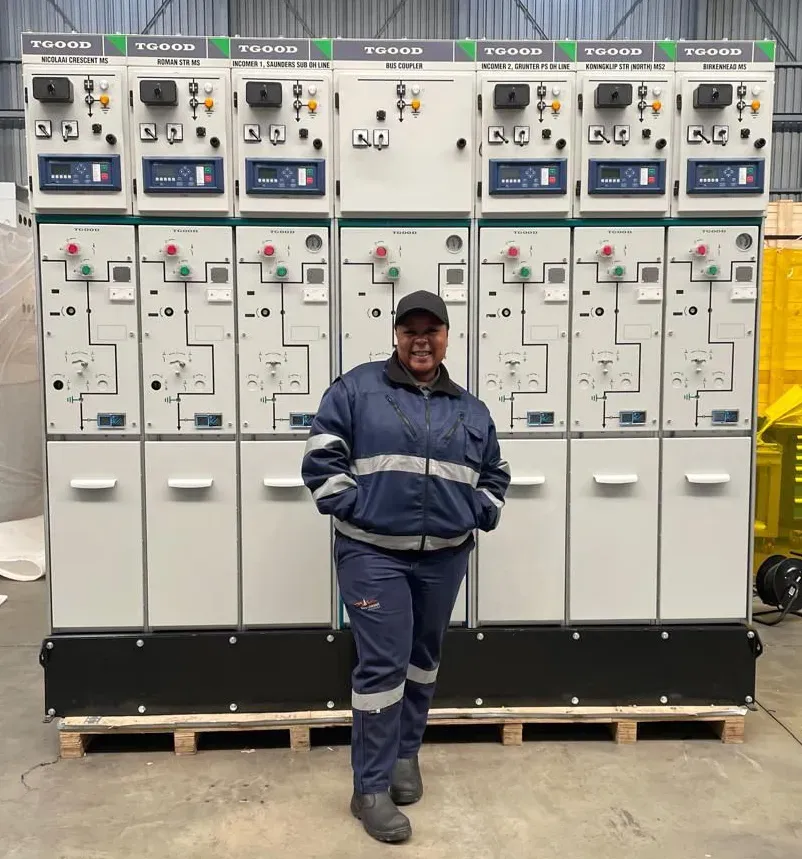
A modern RMU contains a number of functional units housed within a single, gas-insulated or solid-insulated enclosure. Each unit serves a specific role in the substation:
- Incomers bring power into the substation from the upstream network—typically from an overhead line or underground cable fed from a bulk supply point.
- Feeders distribute power outward to downstream customers or further sections of the network.
- A bus coupler connects the two incoming busbars, allowing the operator to reconfigure the substation—for example, to transfer load from one incomer to the other during maintenance or a supply interruption.
- Circuit breakers provide automatic fault protection, tripping within milliseconds when an overcurrent or earth fault is detected, to limit damage and protect people.
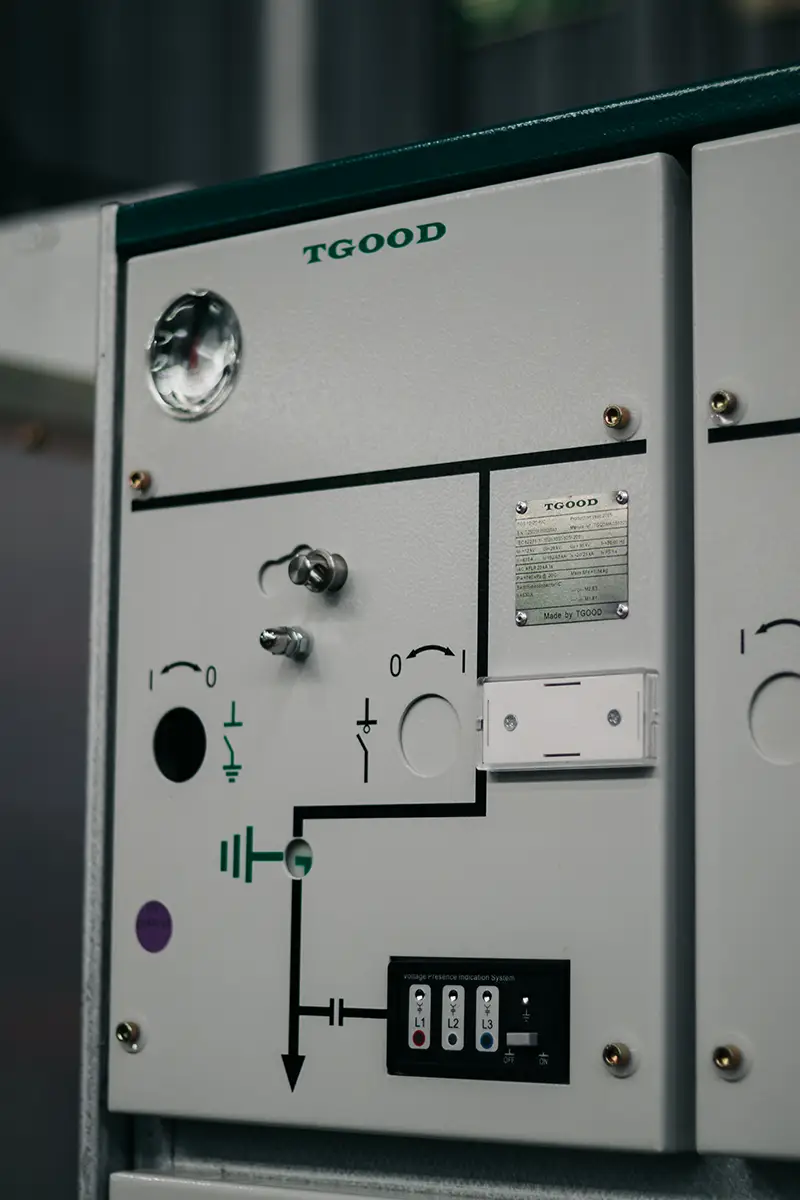
The switching devices inside an RMU are housed in a sealed, insulated environment—either filled with sulphur hexafluoride (SF6) gas or solid dielectric material—which eliminates the risk of flashover and allows the unit to be installed in compact indoor or kiosk enclosures without safety clearances needed by open-type switchgear.
TGOOD does also offer SF6-free alternatives made by Brunstock.
Why are RMUs important in South Africa?
 South Africa’s distribution network serves a wide range of environments: dense urban centres, sprawling townships, industrial precincts, agricultural areas and remote communities. RMUs are a critical building block across all of these, enabling municipalities and licensed distributors to manage supply reliably and respond quickly to faults.
The reliability of an RMU directly affects how long customers are without power when a fault occurs. A well-designed, properly configured RMU allows network operators to isolate the faulted section and restore supply to the rest of the network in minutes rather than hours—a capability that becomes increasingly important as South Africa works to improve its distribution network performance.
Customer-specific configurations
Not every substation has the same requirements. The number of feeders, the protection relay settings, the communications interfaces, and the physical configuration of the RMU must all be matched to the specific network it will serve. A substation at the junction of several street feeders in a residential area has different requirements to one feeding an industrial precinct or connecting a renewable energy source to the grid.
TGOOD Africa works closely with municipalities and network operators to engineer RMU solutions configured for each specific application—including the number and type of switching units, protection settings, metering, and remote monitoring capability. The result is switchgear that integrates directly into the existing network without compromise.
Delivered ahead of schedule
The seven-panel RMU assembly pictured here—comprising two incomers, four feeders and a bus coupler, all with circuit breaker protection—is a recent example of a customer-specific TGOOD solution delivered to a South African municipal distribution application ahead of schedule. Each panel is clearly labelled for its designated function within the substation, ready for installation and energisation.
On-time—and ahead-of-schedule—delivery matters in infrastructure projects, where delays in one package can hold up civil, cabling and commissioning works across the whole site. It is something TGOOD Africa takes seriously on every order.
Find out more about
- Our medium voltage switchgear offering
- Our power solutions for the renewables industry
- Our TGOOD Africa regional subsidiary
 For enquiries about TGOOD’s switchboards, modular substations or transformers for African projects, contact our local team:
Email: Contact form
Phone: 27 010 010 5706